


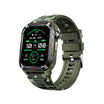

Short answer: Your GPS is slow because it's rebuilding data, fighting buildings, or being throttled by power-saving mode. The fix is a 60-second pre-run checklist: start your workout mode before you're ready to go, get to open sky, and make sure your watch's location services aren't being restricted. Here's the exact order, from fastest fix to last resort.
The 60-Second Pre-Run Checklist
Before you lace up, run through this in order. Most GPS problems are solved by step one alone.
-
Hit "Start Workout" before you're ready to move. Then let it sit while you stretch or adjust your shoes.
-
Step outside — or at least get to a window. GPS doesn't lock indoors.
-
Check your watch's GPS signal indicator. Wait for it to go solid or full.
-
Confirm Location Services is on and not restricted by battery saver.
-
Hold your arm up or keep the watch face skyward. Your body blocks the signal.
-
If it's still stuck after 60 seconds, restart the watch.
Why It Happens: Three Root Causes
GPS lock feels random, but it isn't. It's almost always one of three things:
1. Stale ephemeris data. GPS satellites broadcast their location constantly. Your watch caches that data — called the almanac — to lock on fast next time. If the cache is old (you haven't used GPS in a week, or you've been indoors), the watch has to rebuild it from scratch. That takes minutes.
2. Physical obstruction. Satellites orbit 12,000 miles away and broadcast weak signals. Trees, buildings, hills, and even your own body block them. Urban canyons — streets between tall buildings — are the worst case.
3. Power-saving restrictions. Battery saver can limit GPS sampling or disable background location scanning. This saves juice but slows the initial lock dramatically.
Fix 1: Start the Workout 30–60 Seconds Early
This is the habit change that matters most, and it costs you nothing.
Hit "Start Workout" before you're ready to run. While you're tying laces, doing warm-up drills, or walking to the street, the GPS is locking in the background. By the time you actually move, the satellite indicator should be solid.
Most watches show a GPS signal strength icon. Wait for it to go full or solid before you hit "Go." If you start moving before the lock, your first few minutes will be estimated from stride — not tracked from satellites.
Fix 2: Get to Open Sky
If you're trying to lock GPS from inside your house, in a car, or between two tall buildings, no amount of waiting will help. You need open sky.
Walk to the end of your driveway. Get to the nearest open space. If you're in a city, find the widest intersection you can. Once you've got a lock, you can move into tree cover — the lock usually holds even when the signal weakens. The hard part is getting the lock, not keeping it.
Why this works: GPS satellites broadcast on a narrow frequency band. Buildings don't just block the signal — they bounce it, creating false positions and delayed locks. Open sky means clean signal.
Fix 3: Update Your Ephemeris Data Through the App
The cache that helps your watch lock quickly goes stale after a few days. Here's how to refresh it:
Open the companion app and let the watch sync with your phone. This pushes fresh almanac data from the internet. Connect the watch to Wi-Fi. Many watches download updated satellite data automatically when on Wi-Fi.
One slow lock, then it'll be fast again. If you've been indoors for a while — especially if you've flown to a new region — your watch will take longer on the first outdoor run. That's normal. It's rebuilding.
Fix 4: Check Location Services and Battery Saver
Your watch uses more than satellites. It uses A-GPS — assisted GPS — which pulls cached satellite data from Wi-Fi networks and Bluetooth beacons to speed up the initial fix. If those scanning features are disabled by power-saving mode, GPS feels dramatically slower.
Check:
-
Location services is on (Settings → Privacy → Location)
-
Wi-Fi and Bluetooth scanning is enabled (usually in Location → System Services)
-
Battery saver is off for your workout, or set to unrestricted for the companion app
On Android: "Google Location Accuracy" should be on. On iOS: "Wi-Fi Networking & Bluetooth" under System Services should be on.
Fix 5: Restart to Clear Temporary Cache
A restart clears temporary GPS cache and resets the location service. It takes 10 seconds and fixes a surprising number of stuck-lock problems.
Restart before you head out if:
-
GPS has been slow on recent runs
-
You've travelled to a new city or country
-
The watch hasn't been restarted in weeks
Fix 6: Don't Turn On Battery Saver Before a Workout
Power-saving modes on some watches reduce GPS sampling rate or disable background location services entirely. That extends battery life at the cost of slower locks and less accurate tracks.
If your battery is low and you're worried about running out, use a "GPS only" mode rather than battery saver. That still tracks your route accurately but drops multi-constellation or high-accuracy sampling.
The Bottom Line
GPS lock isn't random. It's your watch listening to the faintest signals in the sky, rebuilding data, and fighting physics.
Start the workout mode early. Get to open sky. Make sure scanning isn't disabled. Refresh your data. Restart occasionally. Keep battery saver off.
Do those six things and you'll spend less time pacing in your driveway and more time actually running. 🛰️


Laat een reactie achter
Deze site wordt beschermd door hCaptcha en het privacybeleid en de servicevoorwaarden van hCaptcha zijn van toepassing.