




You know the drill. Your legs are wrecked, your HRV is low, your watch literally told you to take it easy. So you go for a "light jog." An hour later, you're toast — and somehow more tired than before your "rest day."
Sound familiar? You just turned recovery into another workout. That's not recovery. That's a setback in disguise.
Why Easy Days Go Wrong
Here's the trap: you're motivated. You put on your watch, you start moving, and then you see your heart rate — and you start chasing it up. A little faster. A little harder. Before you know it, you've done a tempo run.
The problem? Your body needed a recovery day, not a training day. Recovery happens when your heart rate stays low and steady — not when you sneak in a second workout.
The Magic Number: 30–60% of Max Heart Rate
This is the sweet spot for active recovery. Low enough to promote blood flow and flush out soreness, high enough to actually feel good — but not so high that you're stressing your system again.
Quick math for a 35‑year‑old:
-
Max heart rate ≈ 220 – 35 = 185 bpm
-
Recovery window = 30–60% of 185 = 56–111 bpm
So your job on a recovery day? Keep it between 56 and 111. That's it.
Walk. Easy spin. Gentle swim. Light yoga. If your heart rate creeps above 111, slow down. If it dips below 56, you're basically sitting — and that's fine too.
How to Actually Use Your Watch for This
1. Set a heart rate alert.
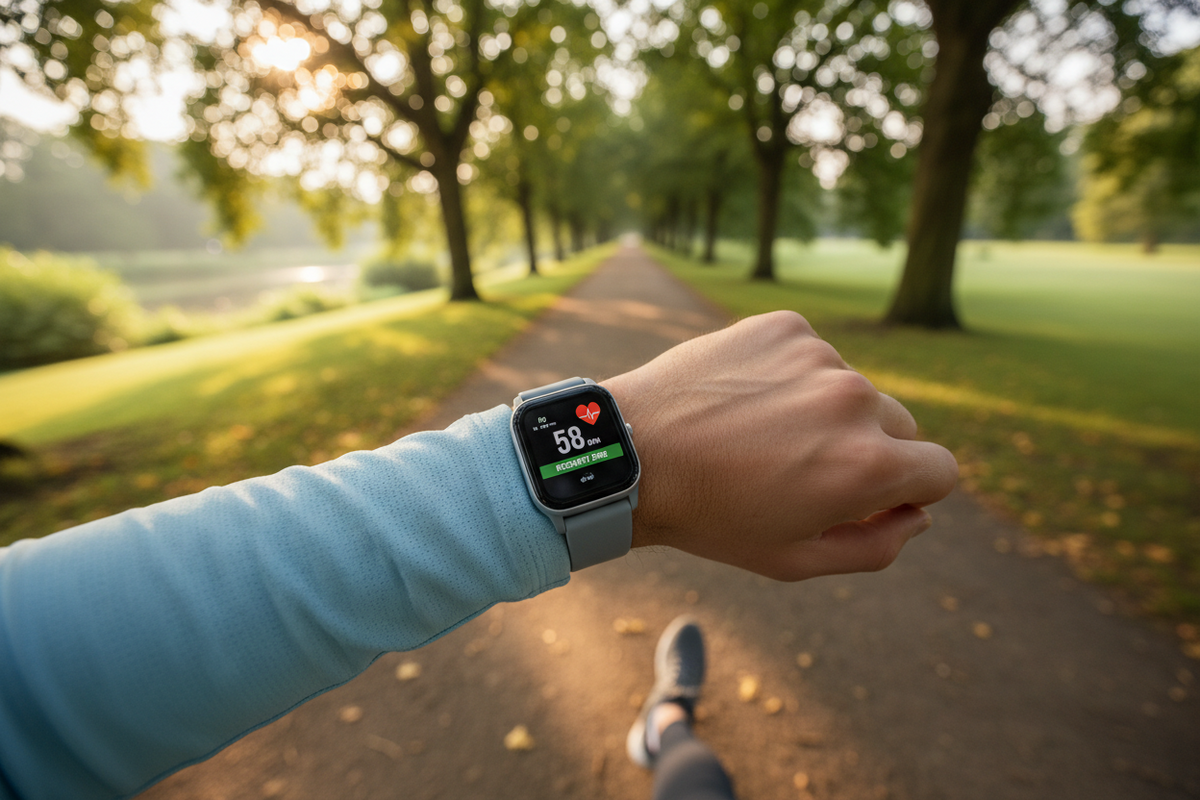
Most watches let you set a zone alert. Set your upper limit to 111 (or whatever your 60% number is). Your watch will buzz when you cross it. That's your cue to ease off.
2. Watch your recovery time.
After a hard session, your watch shows how long you need to recover. If it says 48 hours, don't do a hard workout at hour 24. That's not toughness — that's ignoring data.
3. Check your HRV in the morning.
Low HRV? Your body is saying "not today." Trust it. A recovery day today beats a forced workout that wrecks tomorrow.
4. Use the "active recovery" workout mode.
Many watches have a dedicated mode that keeps the focus on staying easy. It won't track pace or push you. It just watches your heart rate — exactly what you need.
What Counts as Active Recovery?
-
Walking — underrated, almost impossible to overdo
-
Easy cycling — flat, slow, no intervals
-
Swimming — gentle laps, not sprints
-
Yoga or stretching — breathing and mobility
-
Light mobility work — foam rolling, hip openers
What does NOT count: intervals, hill repeats, tempo runs, "just a quick 5K," or anything you'd brag about later.
The Bottom Line
Recovery isn't laziness. It's when your body actually gets stronger. And your watch already knows exactly how hard you should go — you just have to listen.
Keep your heart rate between 30% and 60% of your max. Set an alert. Slow down when it buzzes. And remember: the goal of a rest day isn't to feel like you did something. It's to feel better tomorrow.
Rest is training. Treat it that way. 😉


Hinterlasse einen Kommentar
Alle Kommentare werden vor der Veröffentlichung geprüft.
Diese Website ist durch hCaptcha geschützt und es gelten die allgemeinen Geschäftsbedingungen und Datenschutzbestimmungen von hCaptcha.